


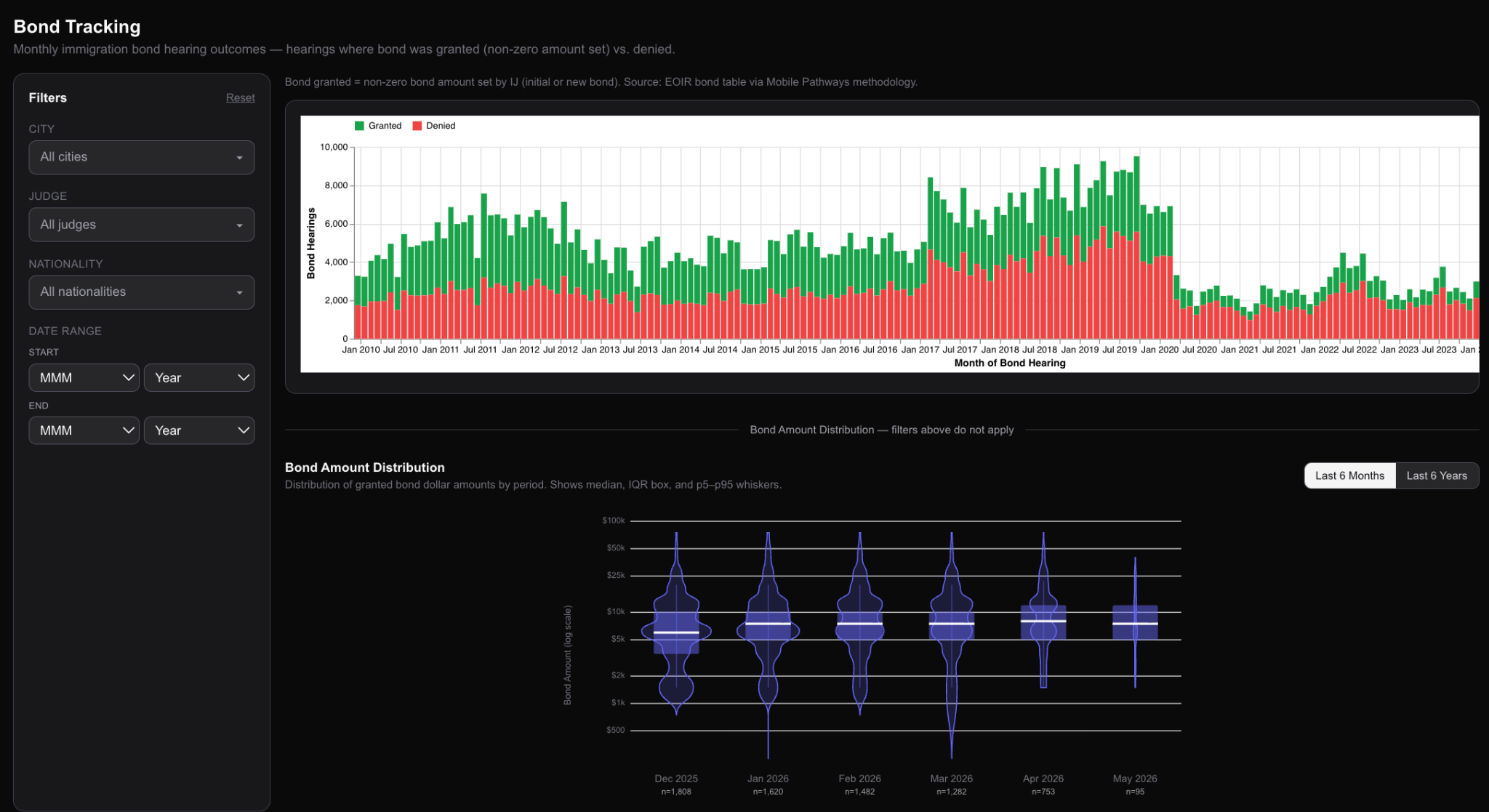
85 people. That's the total granted bond from immigration detention in April 2026, down 94% from the start of the year. As The Bond Plummet: Is the Supreme Court Next? documents, U.S. immigration bond hearings have reached a near-total collapse, with only 458 hearings recorded nationwide last month. Mobile Pathways' new Bond Tracking dashboard is tracking every number.
This post describes the data behind the collapse, and why the methodology behind that conclusion matters.
What Hangs on a Bond Hearing
A bond hearing is an important pathway for release from immigration detention while a case moves through court. For many detained immigrants, it is the primary opportunity to seek release from custody while their case is pending. If bond is granted and paid, an individual may be able to return to their community, continue working, and access legal and family support while awaiting a court decision. If bond is denied, or set at an amount they cannot afford, they typically remain detained for the duration of their case, which can last months or, in some instances, years.
Research has found that detained individuals are less likely to obtain legal representation and generally have lower rates of relief or case success than those who are not detained. Some choose voluntary departure rather than remain in detention during prolonged proceedings. Because bond hearings can determine whether someone remains detained while their case proceeds, changes in how often they are held can shape access to release and, in turn, the conditions under which individuals pursue their cases.
Fewer Hearings. Fewer Chances.
The picture that emerges from Mobile Pathways’ latest bond data is hard to ignore. The number of bond hearings dropped sharply in the second half of 2025 and has kept falling. Grants on bond hearings have fallen even farther, hitting the lowest levels on record (data available since 2010). On average, about 3 out of 4 bond hearings ended in denial, and in the most recent month that climbed to more than 4 out of 5. Fewer people are getting a hearing, and of those who do, fewer are getting out.
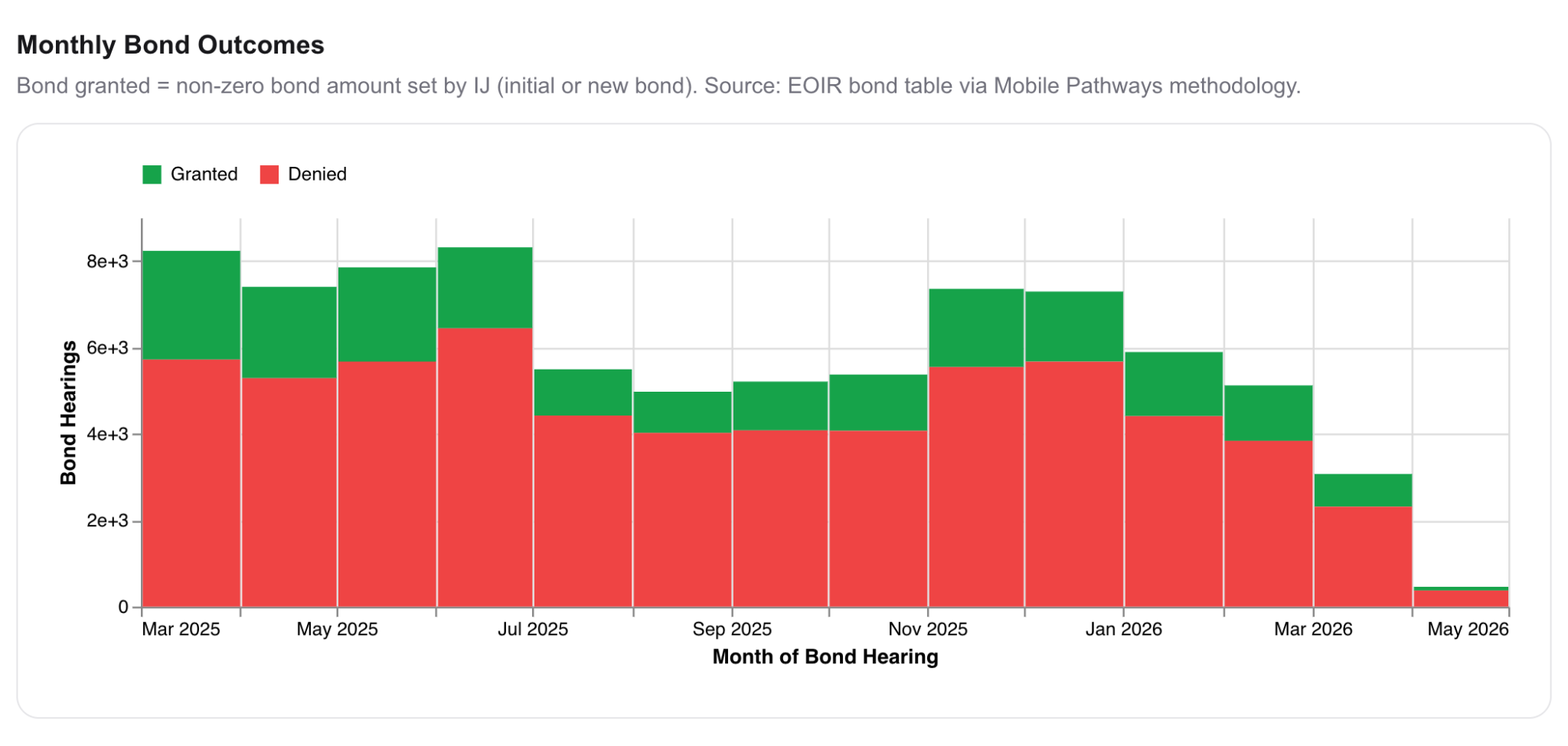
What makes this particularly striking is how cleanly the numbers track with what is happening in the courts. The July 8 DHS memo, which declared that anyone who entered without inspection was ineligible for bond, was followed immediately by a stark drop: grants fell roughly 43% and total hearings fell 34% in a single month.
When the Board of Immigration Appeals issued Matter of Yajure-Hurtado in September, making that no-bond policy binding on every immigration judge in the country, bond grants actually ticked up 15% rather than falling further. That counterintuitive rebound reflects what was happening in federal courts at the same time: judges across the country were issuing orders requiring bond hearings to proceed anyway, in response to habeas petitions challenging the new policy. That legal pressure kept hearings alive through November and December 2025.
The floor dropped out in the spring of 2026. Bond hearings collapsed nationwide, falling from 3,067 in March to just 458 in April, an 85% decline, as courts across multiple circuits closed off access in rapid succession. The Ninth Circuit's stay of Maldonado Bautista neutralized the most prominent ruling keeping hearings alive, while mandatory detention rulings in the Fifth and Eighth Circuits closed off access across much of the country. You can see it in the data, month by month.
We Measure What’s Happening, Not When it’s Filed
Bond hearing counts can vary depending on one key methodological choice: which date field is used to assign a hearing to a given month. After extensive review by our team — including former Immigration Judge Elizabeth Young, Immigration Attorney Jeffery O'Brien, Esq., and Chief Data Officer Ben Mann, we determined this to be the most effective method for reporting bond hearings, as it mirrors EOIR's own reporting framework.
EOIR's data includes two date fields. The first is the hearing date, the date the bond hearing actually took place before a judge. The second is the administrative completion date, defined by EOIR as the date the immigration judge rendered a decision on the proceeding. That completion date can lag the actual hearing by weeks, months, or even years. In February 2026, for example, completions recorded that month included cases with hearing dates stretching back to 2013.
Using the completion date to count monthly hearings does not tell you how many hearings happened that month. It tells you how many administrative records were closed, which is a very different thing. Mobile Pathways uses the hearing date because we are measuring real-time court activity, particularly critical when current policies are actively restricting whether hearings are being scheduled at all.
Granted on Paper Isn't the Same as Free

Counting hearings is only part of the picture. To measure outcomes, we assessed if bond was granted using actual bond amount values rather than EOIR's coded decision field. That field carries known data quality issues, including records coded as "Denied" that nonetheless list a bond amount. A case is counted as granted when a non-zero bond amount is recorded, which produces a more precise and auditable measure of who actually received a path to release.
One important caveat: we track whether a bond was set, not whether it was paid. A bond amount that is unaffordable in practice functions as a denial even when technically recorded as granted.
Our grant numbers, if anything, overstate actual release access.
The data is clear: bond hearings aren't just declining, they're disappearing. This dashboard exists so anyone can see it for themselves.


