


As featured in our annual report, Mobile Pathways' work with Hands United and partner advocates for the Deaf and Hard-of-Hearing community brought us to a question worth digging into: how are these respondents actually faring in immigration court? Outcomes worsened across the board this past year, but they worsened faster for this community on every outcome measure we checked. We were honored to see this work reverberated by Mother Jones in their investigation into what this looks like for the people living it.
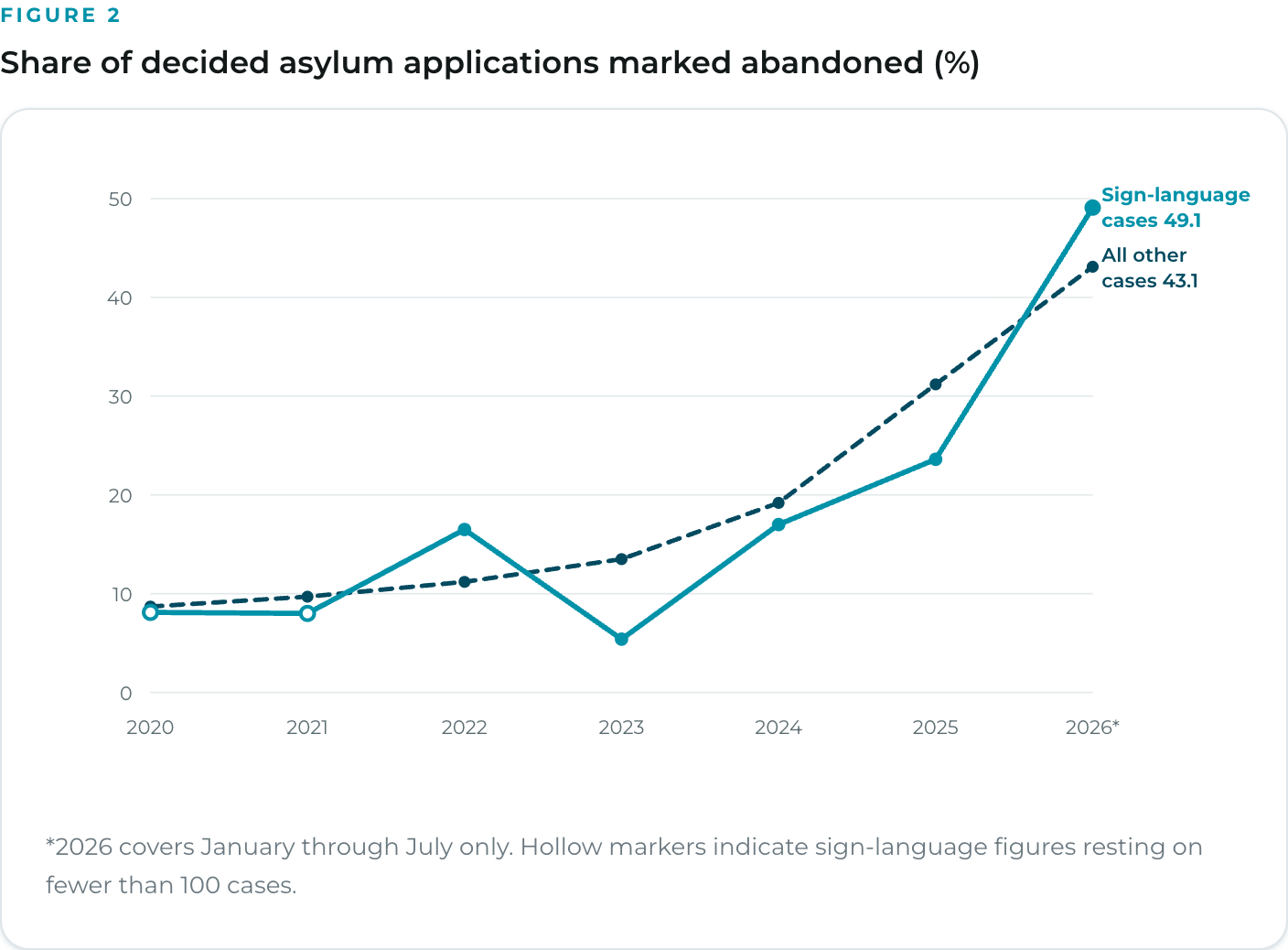
As we waded into the data, one measure began to stand out. Abandonment, when a judge closes an asylum case without ruling on the underlying claim, has risen across the entire immigration court system. Late hearing notices, new fees, and fear of detention may all be driving this unprecedented trend.
What follows lays out the outcomes in full, then digs into two specific issues behind this lack of access to justice for a vulnerable population.
Three Outcomes, One Direction
.png)
Three separately measured outcomes moved the same direction. In-absentia decisions grew about three times as fast for sign-language cases as for the overall population. Removal orders grew about 1.4 times as fast. Neither has grown past the overall population's rate the way abandonment has.
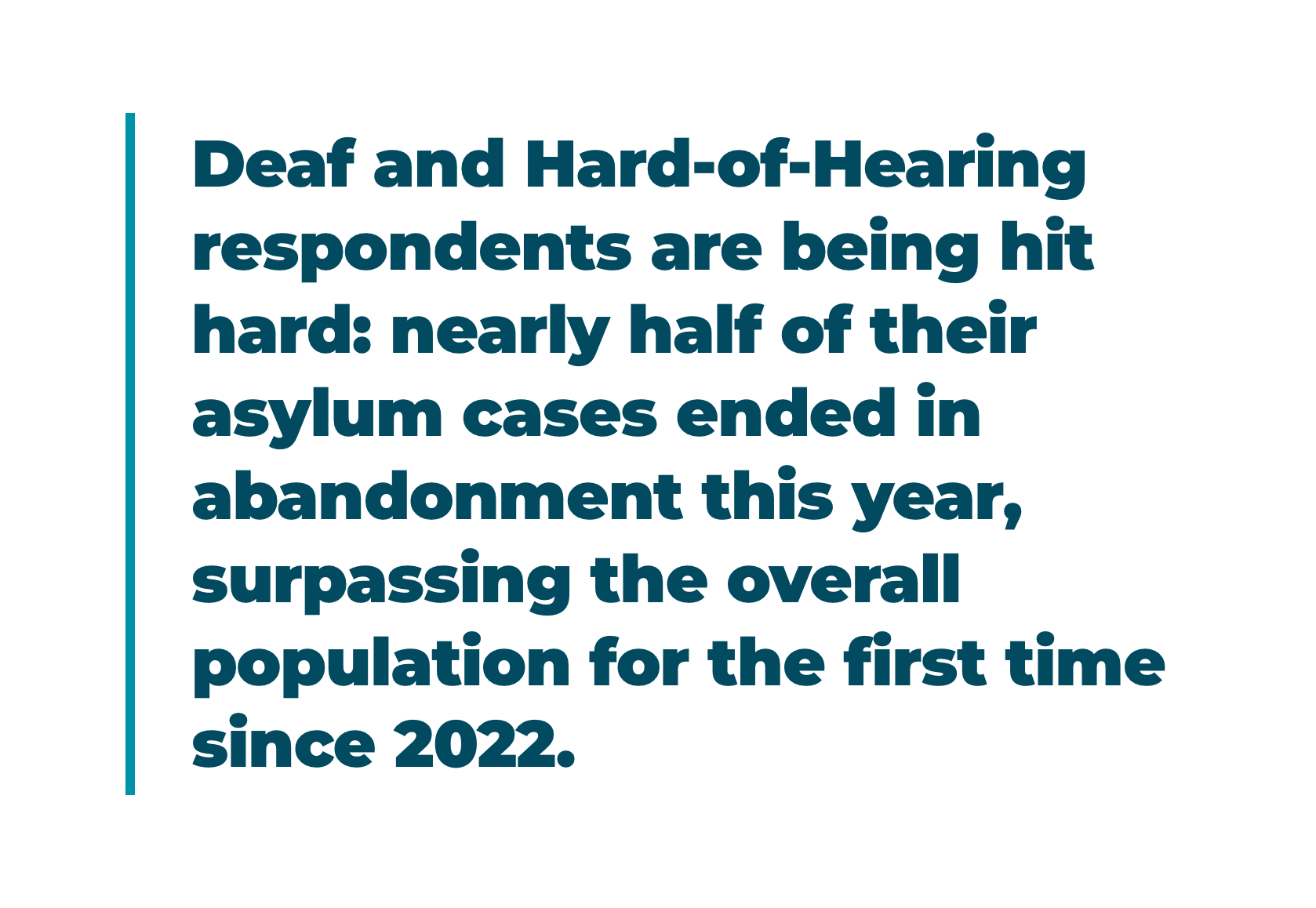
Abandonment more than doubled between January 2025 and July 2026, and now end nearly half of all cases, which is more than the general population. This cohort started the period about eight points below the overall population's rate and ended it about six points above. It's the only one of the three outcomes where they're now doing worse in absolute terms, not just accelerating faster, and the first time they've been above the overall rate since 2022.
Removal orders followed a similar climb, reaching just over half of decided removal cases. In total, 373 people from this community received removal orders between January 2025 and July 2026, a judge's decision on the record rather than a confirmed departure. What happens before that decision matters just as much.
Interpreter Failures
Sign-language cases in immigration court are delayed by interpreter failure about eleven times as often as everyone else's, a gap that doubled in 2025. Immigration courts log a specific reason each time a hearing is adjourned, and interpreter failure is one of the categories built into that system.
This can be due to no interpreters available, one who doesn't speak the right language or dialect, or one who simply isn't able to sign. The hearing gets rescheduled, the case sits open longer, and the finish line gets further away.
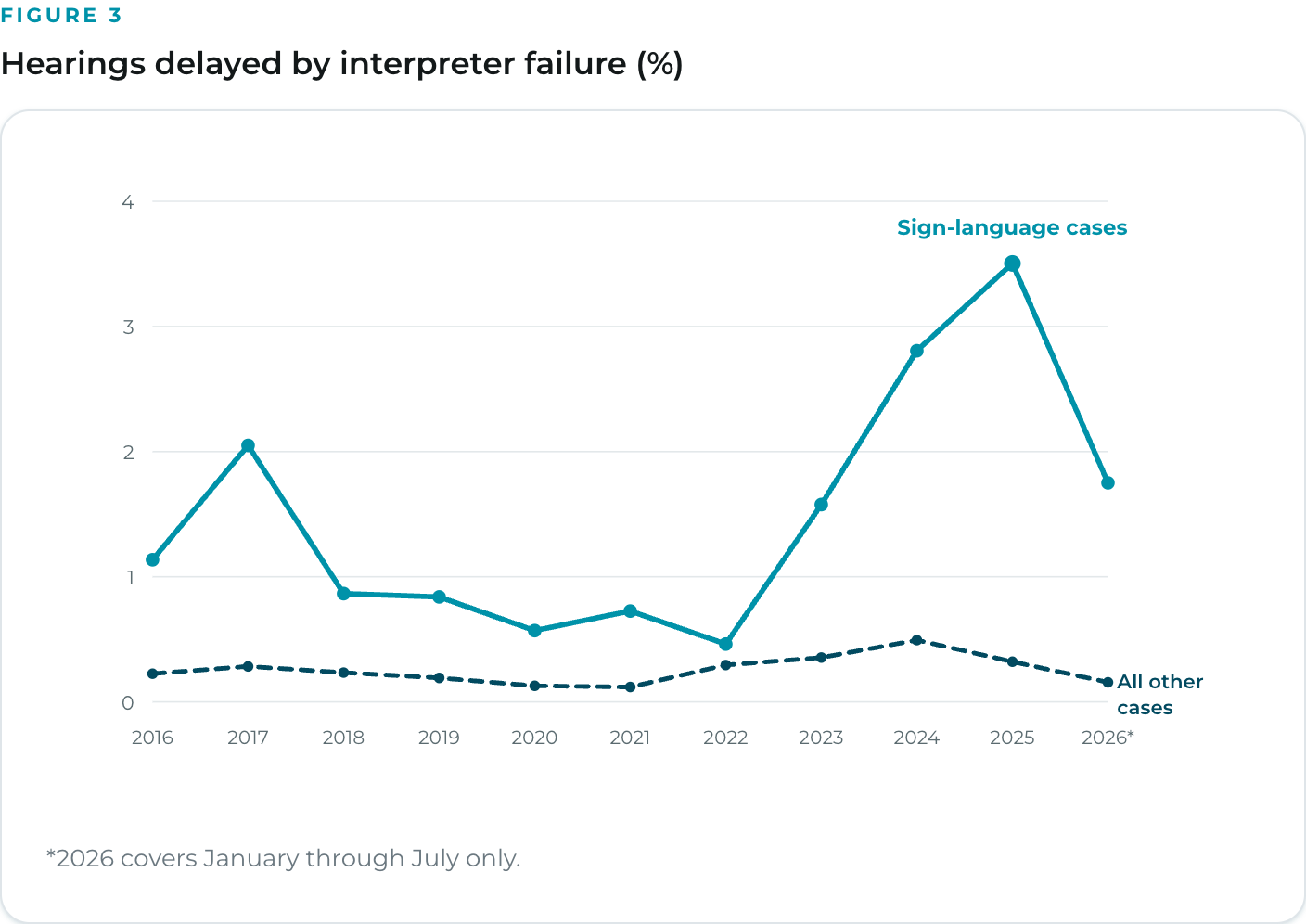
The numbers above apply only to hearings that were postponed. They don't capture hearings that go forward anyway despite interpreter failures, which leave no trace in the data. That gap is very likely a floor, not a ceiling.
Tracking This Population in the Data
Immigration courts record language need in more than one place: the case file, and the record of each individual hearing. This analysis found these are inconsistently populated, and checking just one table does not reveal the full population.
Of the 1,285 sign-language cases currently open, 881 are flagged on the case file itself. The other 404 only appear in hearing records: the hearing shows the person needed sign-language interpretation, but the case file still lists a spoken language. In the fields we reviewed, that need is recorded at one stage of the case but not another.
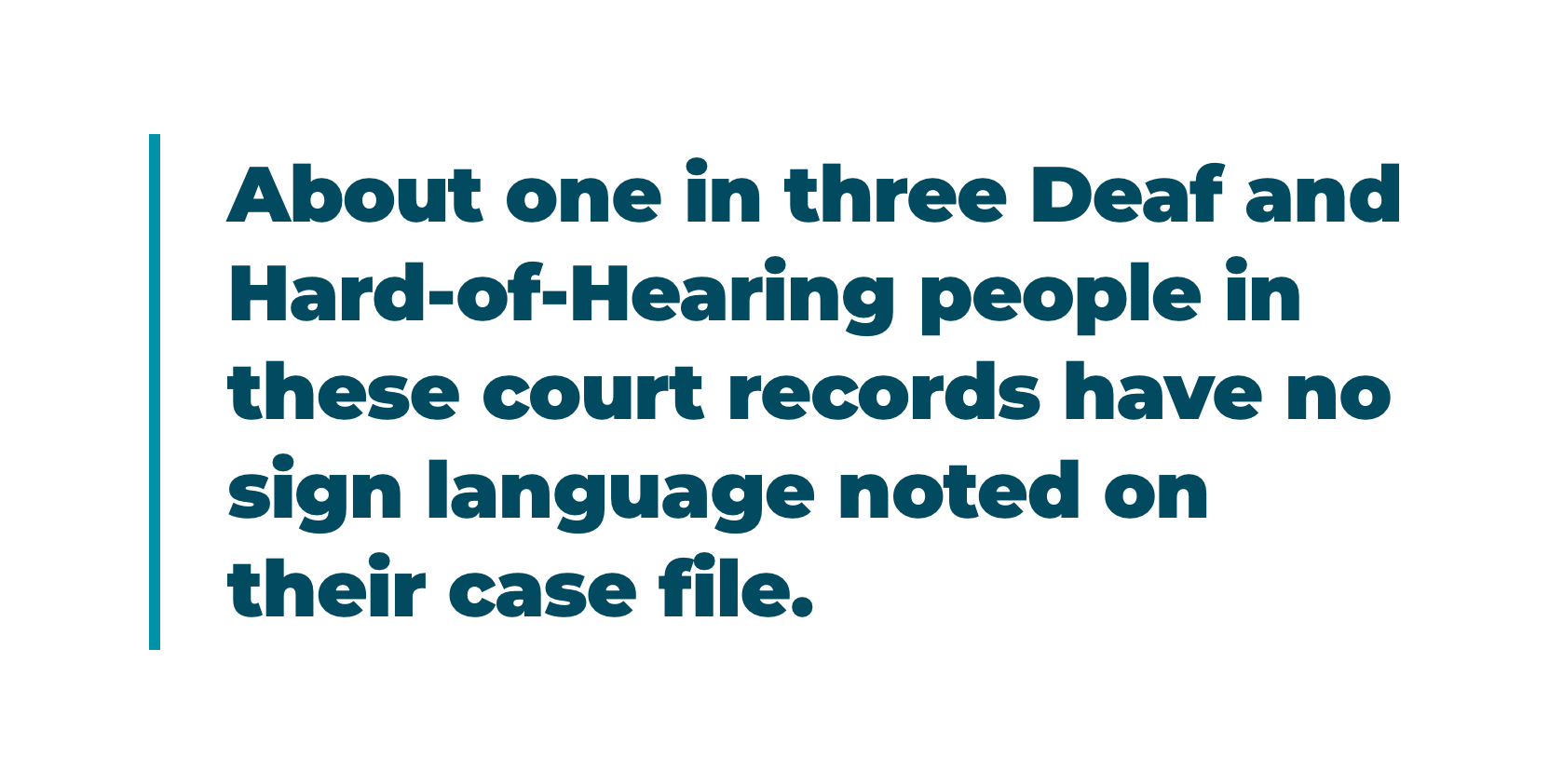
Checking the case file alone misses about one in three people in this group. Human Rights First documented a related gap in 2023: EOIR publishes no policy documents, directives, or instructions for how to request a disability accommodation. Our own review found a formal motion type for requesting a specific-language interpreter that appears inactive and unused, though that applies system-wide and not to this group alone.
Every figure above includes both groups. The only difference between them is where the court recorded the need.
Read More

Mother Jones has reported on what this looks like for the people living it: an investigation into Deaf and Hard-of-Hearing immigrants in the deportation system.
Our own work with Hands United is covered further in Mobile Pathways' 2025 annual report.


